- Key Info
- Overview
- Photos
- Dates
- Journey from old world to new on a cultural adventure through Japan
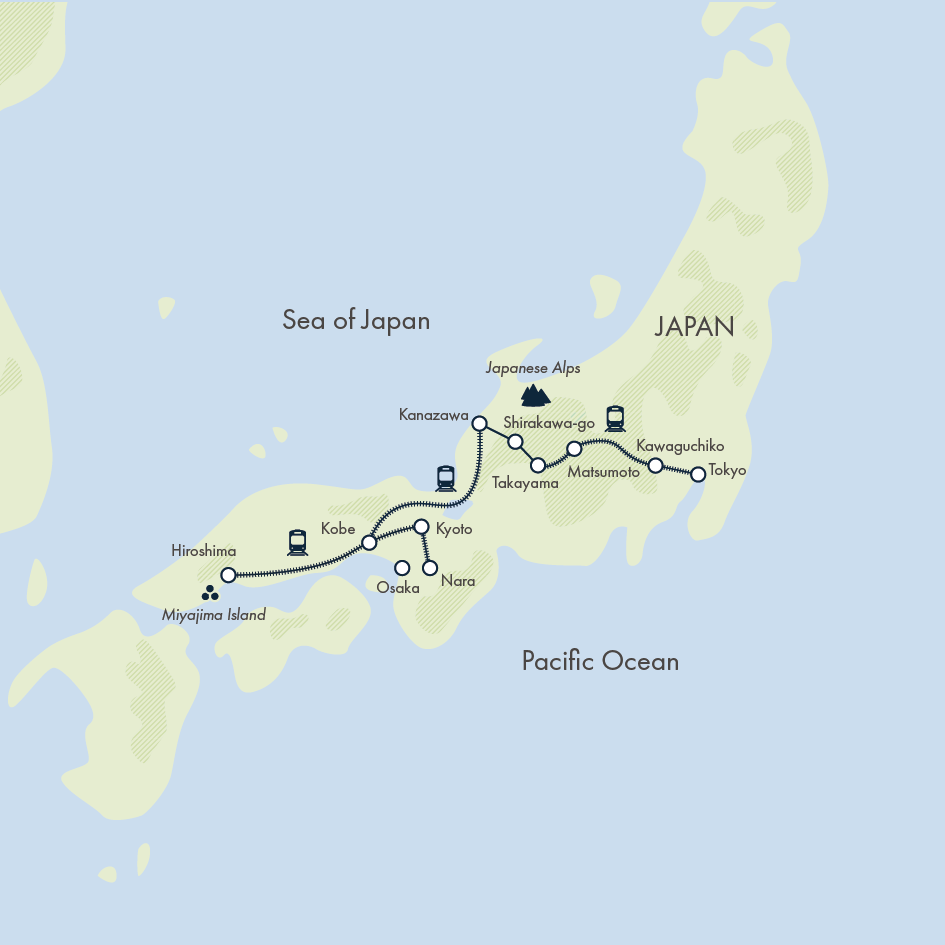
- Use Japan’s excellent public transport, including the iconic bullet train, to move around
- Explore a lantern-lit Gion in the early evening, the most famous geisha district in Kyoto
- Stay in Hiroshima and take a poignant moment to reflect at the Peace Memorial Park
- Immerse yourself in ancient samurai culture in Kanazawa
- Stay in Kawaguchiko, a town on one of the Fuji Five Lakes
The accommodation on this cultural adventure through Japan showcases traditional hospitality, with onsen (hot spring baths) in some of the properties. Each room has a private bathroom, which is not always the case with traditional Japanese accommodation. The places we typically use are on the day-to-day itinerary; however, below are a few of the notable accommodations on this trip.
Kyoto: Hotel Monterey Kyoto (nights 1-3)
Begin the trip at this stylish property in the heart of Kyoto near cultural landmarks and shopping districts. It blends European elegance with Japanese charm, offering refined rooms, modern amenities, and easy access to the historic sites of the city. Spa Trinite on the 13th floor features natural hot spring water sourced from approximately 3,280ft (1,000m) underground and includes indoor and outdoor onsen bathing facilities with views over Kyoto.
We also use Hilton Garden Inn Kyoto Karasuma Shijo on departure dates: 18 October 2026 and 19 October 2026.
Kanazawa: Hotel Amanek Kanazawa (6-7)
This stylish hotel has an ideal address in downtown Kanazawa, under a 20-minute walk to the Kenrokuen Gardens. It also has an onsen exclusively for guests, fitness room and lounge, plus coin laundry machines.
Matsumoto: Dormy Inn Matsumoto (night 10)
This Matsumoto outlet of the Dormy Inn brand has hot spring baths, saunas and cold baths on the top floor. The restaurant serves traditional Japanese and international foods. Make sure to seek out the shinshu soba, a local speciality made with wild vegetables and nameko mushrooms.
Onsen (Japanese hot springs)
For many visitors to Japan, the onsen is unfamiliar territory. An onsen is a Japanese hot spring and the bathing facilities and inns frequently situated around them. The combination of a strict bathing etiquette, that nudity is compulsory, and that the water temperature is often hotter than most whirlpool baths can cause some reluctance for first timers. However, once the courage is mustered, you may discover that an onsen is one of the highlights of your visit to Japan. Please be aware, you may be refused entry if you have large and visible tattoos. Some accommodations may have private baths available for reservation.
Worth knowing
Room sizes and beds in Western-style hotels in Japan are generally smaller. Twin rooms will be provided as standard for two passengers sharing a room, as these offer more space and comfort than double rooms.
In Japan, often single supplements are accommodated in either a single or a twin-bedded room. Double for sole use rooms are limited in availability and cannot be guaranteed.
Some accommodations may provide slippers and yukata (a Japanese-style dressing gown).
If you would like to add pre- or post-tour accommodation to your existing booking, we strongly recommend you request well before 30 days before departure. Booking requests within 30 days before departure, including pre- and post-tour accommodation, and especially during peak season (March-April/October-November), may not be possible due to limited availability during peak travel periods.