- Key Info
- Overview
- Photos
- Dates
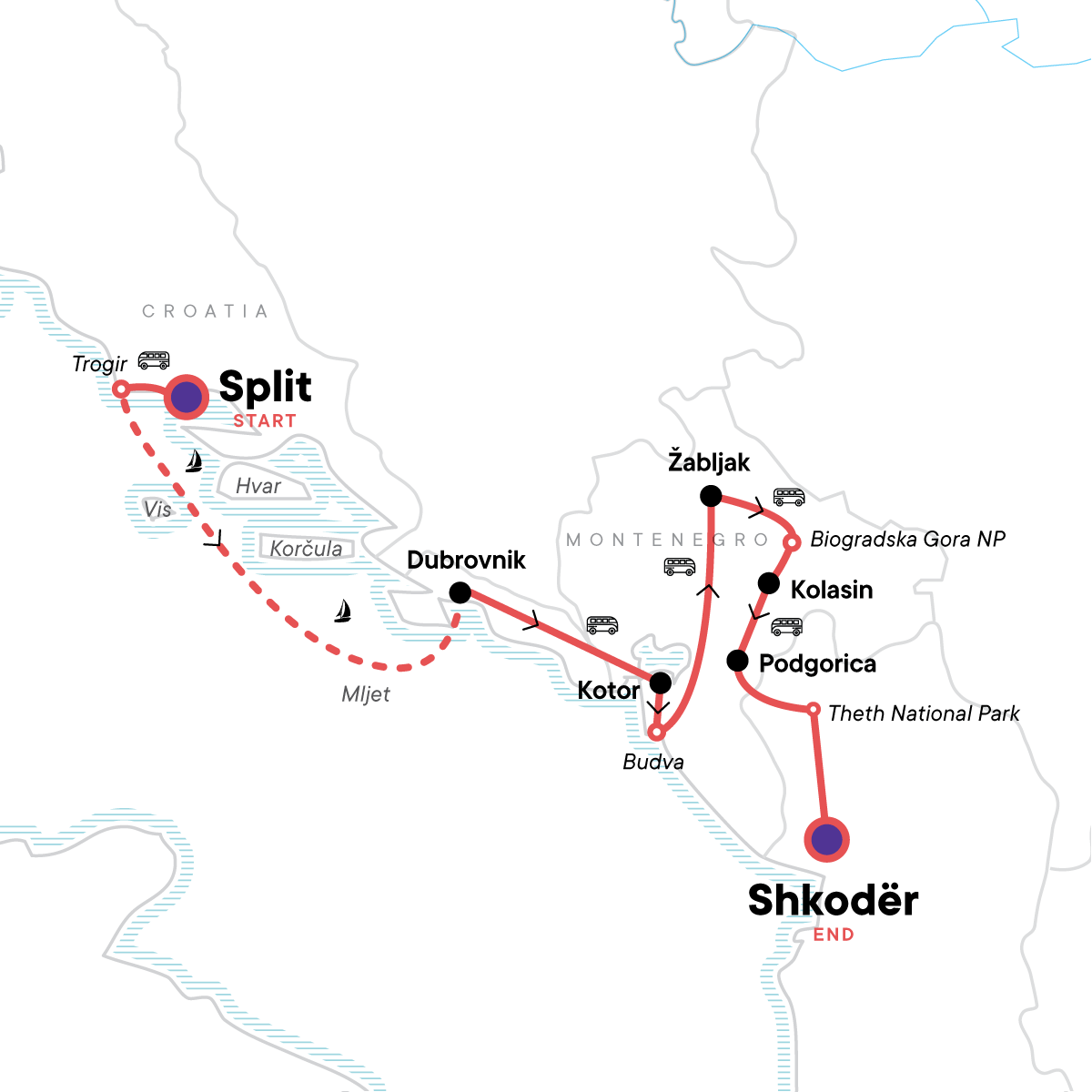
Sail Croatia’s Dalmatian coast before exploring Montenegro and Albania’s highlights on a small-group journey from Split to Tirana.
A NOTE REGARDING SMALL SPACES ON SAILBOATS:
- Please note that the rooming for these boats is assigned upon arrival and neither particular cabins, nor berths can be guaranteed. You will be sharing a bunk or double bed with your travel partner or one of your fellow passengers of the same sex and sharing the bathrooms onboard.
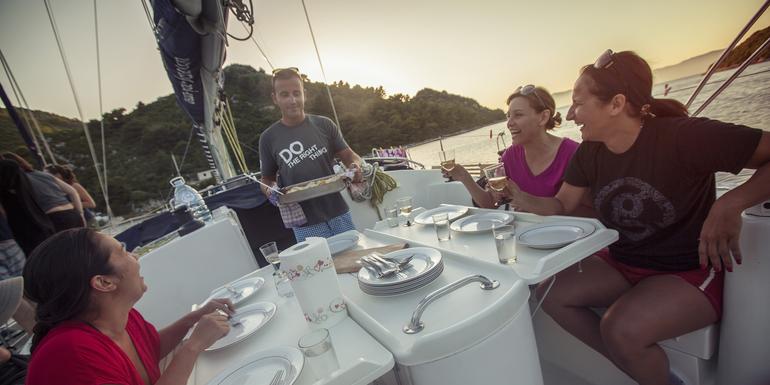
- Please be aware that as this is a real sailboat and not a cruise vessel and the space on board is tight. The sleeping quarters on sailboats are generally kept to a minimum size in order to maximize public space and performance.
- It may be possible to smell engine and/or diesel fumes when in the cabins, due to their proximity to the engine room. Most travel is done during the day, so it is unlikely you will be in the cabin when the engine is running.
- Some people are not comfortable with the type of close quarter arrangements typically found on sailboats, however if a real sailing experience on a real sailboat is what you are after, then this experience should more than make up for cramped quarters.
- Opportunities to sleep in open air on main deck are often available.
- Please note that the skipper may also be sharing the ship's quarters and amenities with you.
- Power onboard is 220V on European 2 pin sockets. Please note that this is not suitable for sleeping aid machines, as the power source may not always be operating. Bringing a battery pack is recommended.
It is important to note that accommodation in Europe tend to be quite different to other areas of the world you may have travelled in. Buildings and rooms are generally old and may not have been renovated or maintained to the highest standard. Downtown hotels in Europe were not built to be hotels but rich owners houses, which have been changed into hotels. Therefore unusual room sizes are common as large rooms have been partitioned in the past, resulting in rather "thin" walls. Reception areas, rooms and bathrooms tend to be very small as they were often added into an existing room, and may have a hand nozzle rather than a conventional shower head.
On this trip you can expect to stay in small family-run hotels (with the exception of the start and finish hotels, which are often larger city hotels), which will vary a little in standard and facilities: some may not have elevators, air-conditioning or English-speaking staff, but most importantly all are locally-run, with some traditional character, and in excellent central locations to give you maximum time for exploring the sights. You can expect to find clean, safe, simple accommodation in convenient locations.
Note that most accommodation in Europe does not have air conditioning units in rooms. Air conditioning is not routinely installed in European homes and workplaces. However, nearly all hotels will provide a standing or desk fan for your room on hot nights. If you do not already have one in your room, please ask your CEO to organize one for you with reception.
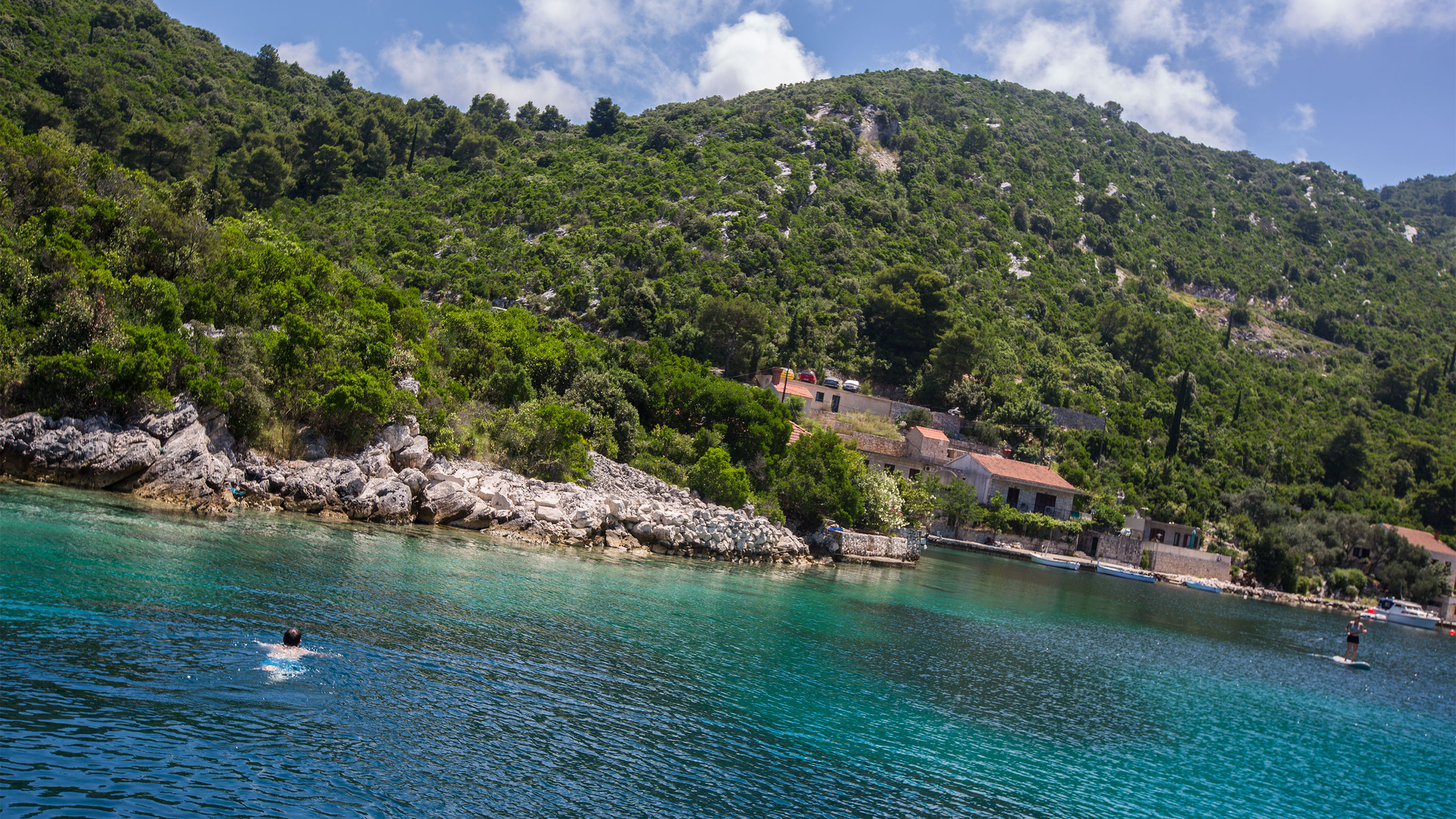
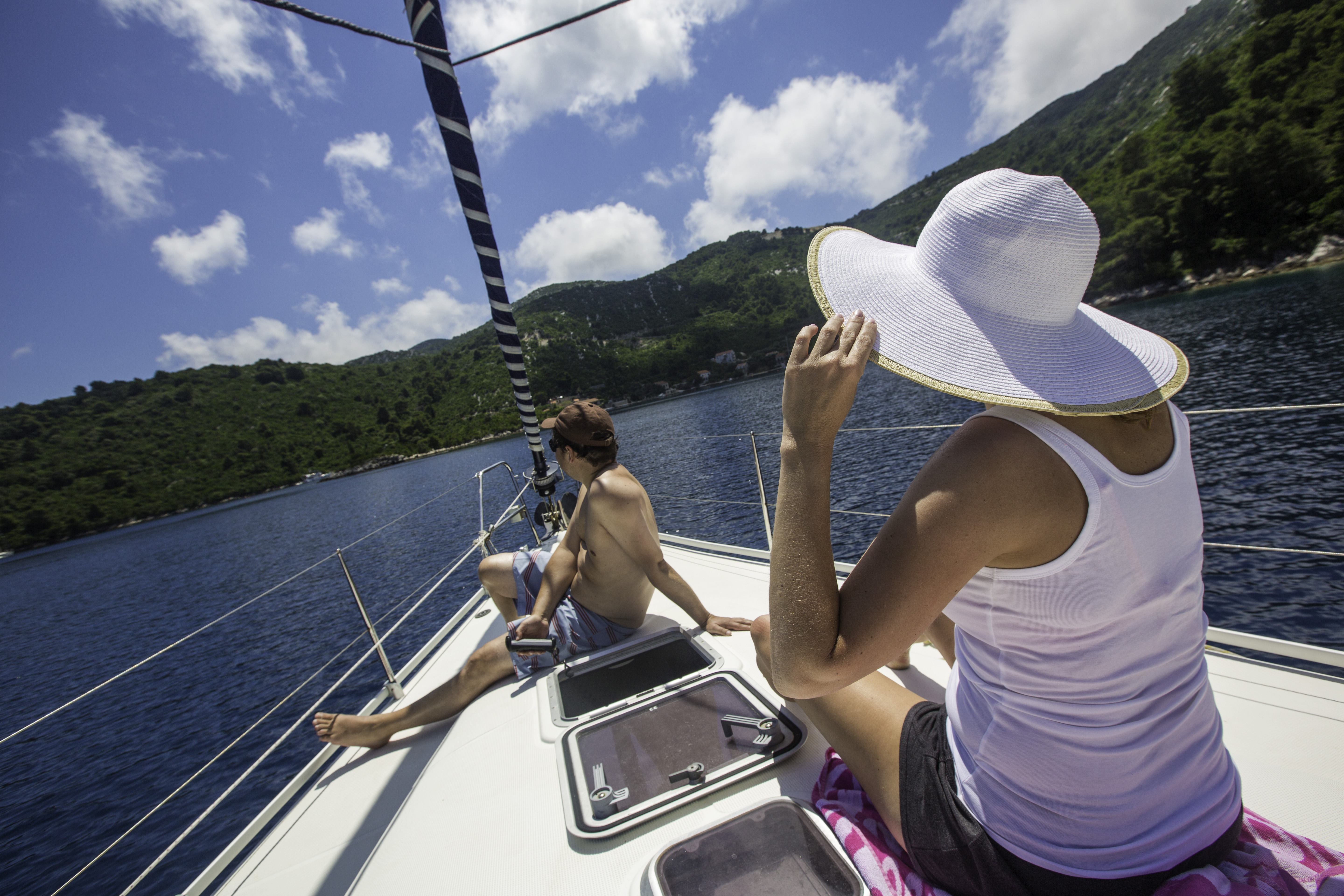
- Sail Croatia’s Dalmatian coast, discovering Roman ruins and secluded beaches.
- Explore Dubrovnik’s old town of churches, monasteries, and plazas.
- Walk Kotor’s walled old town beside towering limestone cliffs.
- Cruise Kotor Bay to Perast and Our Lady of the Rock.
- Visit Ostrog Monastery perched high on a mountain cliff face.
- Walk Biogradska Gora’s pristine forests around Biogradsko Lake.
- Hike Theth National Park to Grunasi Waterfall amid limestone cliffs.
- Explore Krujë’s Old Bazaar and castle, hometown of Skanderbeg.
- Please note that the rooming for these boats is assigned upon arrival and neither particular cabins, nor berths can be guaranteed. You will be sharing a bunk or double bed with your travel partner or one of your fellow passengers of the same sex and sharing the bathrooms onboard.
- Please be aware that as this is a real sailboat and not a cruise vessel and the space on board is tight. The sleeping quarters on sailboats are generally kept to a minimum size in order to maximize public space and performance.
- It may be possible to smell engine and/or diesel fumes when in the cabins, due to their proximity to the engine room. Most travel is done during the day, so it is unlikely you will be in the cabin when the engine is running.
- Some people are not comfortable with the type of close quarter arrangements typically found on sailboats, however if a real sailing experience on a real sailboat is what you are after, then this experience should more than make up for cramped quarters.
- Opportunities to sleep in open air on main deck are often available.
- Please note that the skipper may also be sharing the ship's quarters and amenities with you.
- Power onboard is 220V on European 2 pin sockets. Please note that this is not suitable for sleeping aid machines, as the power source may not always be operating. Bringing a battery pack is recommended.
It is important to note that accommodation in Europe tend to be quite different to other areas of the world you may have travelled in. Buildings and rooms are generally old and may not have been renovated or maintained to the highest standard. Downtown hotels in Europe were not built to be hotels but rich owners houses, which have been changed into hotels. Therefore unusual room sizes are common as large rooms have been partitioned in the past, resulting in rather "thin" walls. Reception areas, rooms and bathrooms tend to be very small as they were often added into an existing room, and may have a hand nozzle rather than a conventional shower head.
On this trip you can expect to stay in small family-run hotels (with the exception of the start and finish hotels, which are often larger city hotels), which will vary a little in standard and facilities: some may not have elevators, air-conditioning or English-speaking staff, but most importantly all are locally-run, with some traditional character, and in excellent central locations to give you maximum time for exploring the sights. You can expect to find clean, safe, simple accommodation in convenient locations.
Note that most accommodation in Europe does not have air conditioning units in rooms. Air conditioning is not routinely installed in European homes and workplaces. However, nearly all hotels will provide a standing or desk fan for your room on hot nights. If you do not already have one in your room, please ask your CEO to organize one for you with reception.